
Adamax Peptide For Everyday Vitality
A premium range, sourced and tested with care.

Free Delivery
Any purchase of $200 or more qualifies for free delivery within the USA.

Highest quality peptides
Our products are scientifically-formulated and produced in cGMP facilities.

Online support
Have questions? We can help. Email us or connect with us via our Contact page.
Adamax Peptide: What it is, How it Works, Safety, and Scientific Research
What is Adamax peptide?
Adamax is a modified variant of the peptide Semax, developed to improve its stability and duration of action in the body, and also to potentially interact more effectively with brain function pathways in experimental tests. It was designed as a better analog of Semax. Due to structural modifications Adamax is often called “N-acetyl Semax base” with other molecular modifications. The changes are meant to boost the peptide’s performance when put in the body, at least in lab and research models.
Disclaimer at the bottom of the page: This is not a product description.
Chemically Adamax is most commonly characterized by the amino acid sequence Ac-MEHFPGPAG-NH2. This sequence shows that it is similar to Semax, but with additional modifications at both the N-terminus and C-terminus of the peptide chain. One of the most prevalent differences is the presence of an adamantane-based moiety. Adamax was developed with the interest of Adamantane, a big and lipophilic structure investigated on other neurological chemicals. It is the defining element which gave the name „Adamax” – a combination of the word „adamantane” and the concept of maximum enhancement.
Adamax Chemical Structure
Adamax is classified as a synthetic peptide and typically falls under the categories of nootropic peptide, cell-penetrating peptide, and a peptide analog containing adamantine. It is not a naturally occurring substance and is not found in the human body without laboratory synthesis. Adamax is usually sold as a white lyophilized powder and is available in many areas for research and industrial reasons exclusively.
Adamax is characterized physically and chemically in different formulations and molecular weights depending on the supplier and the way it is presented. The molecular weights reported are in the range of ca. 984–1032 g mol−1. The peptide is often described as soluble in DMSO and designed for storage under controlled temperature settings for the purpose of stability.
It should be noted that Adamax is not a licensed drug in most of the countries. In certain places it is categorized as a prescription medicine for regulatory reasons, for example in New Zealand, although in others it has surfaced in reports of border seizures as a designer-type substance. These classifications are regulatory prudence, not established clinical use. Adamax is an experimental synthetic modification of Semax aiming to increase molecular stability and brain bioavailability. It stays in the research and experimental setting and is not yet used in recognized medical practice.
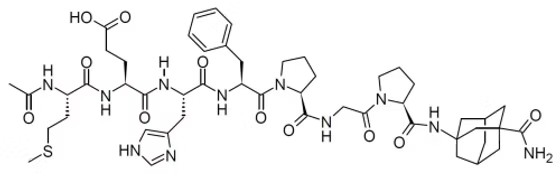
- Product Name: ADAMAX
- Catalogue Number: ADA5-024
- Molecular Formula: C22H52N16O6
- Molecular Weight: 1032.24 g/mol
- Form: Lyophilised Solid
- Also Known as: N-Acetyl Selank
Adamax as a nootropic peptide
damax is typically classified as a nootropic peptide, a class of chemicals being researched for their possible effects on cognitive processes such as learning, memory, focus and mental endurance. The term “nootropic” is no guarantee for cognitive enhancement, but rather refers to substances which are being researched for effects on brain function under controlled research conditions.
Adamax is regarded to be a nootropic peptide because of its similarity to the structure of Semax, a peptide that has been studied extensively in neurobiology for many years. Semax has been originally derived from fragments of adrenocorticotropic hormone (ACTH) and has been explored for neurotrophic and neuroprotective effects in animal models. Building on this idea, Adamax incorporates chemical alterations to overcome some of the shortcomings of Semax, such as quick degradation and poor stability in biological systems.
Adamax is sometimes classified to be a nootropic peptide since it is believed to be linked to brain-derived neurotrophic factor, or BDNF. BDNF is a protein that has a role in neuronal growth, survival and synaptic adaptation. Compounds impacting BDNF signaling could be interesting for the research of cognitive functions, as BDNF is associated with learning ability, memory formation and brain plasticity. This connection is frequently presented as a possible explanation for its purported cognitive and brain supporting effects. However, it is crucial to highlight that this classification is based on assumptions and no conclusive clinical evidence since there are few direct, well-controlled human trials demonstrating a causal relationship between Adamax and BDNF regulation.
An additional feature that makes Adamax a nootropic is its possible interaction with neurotransmitter systems. Experimental and observational research findings indicate that Adamax might affect neuronal pathways involving dopamine, acetylcholine, glutamate and GABA. These neurotransmitters are important for motivation, focus, memory encoding, emotional balance and cognitive flexibility. This does not mean that Adamax directly stimulates or corrects these systems, but rather implies that Adamax is a chemical of interest for studies of how peptide signaling can intersect with wider neural communication networks.
In connection with Adamax, other experimental peptides like P21, which have been examined for their effects on neurogenesis and synaptic plasticity in animal models, are also discussed. Adamax contains an adamantane-related structure that has been compared to other compounds that are designed to enhance stability and brain availability, thus contributing to the research of nootropic peptides.
It should be noted that Adamax is not a proven nootropic. Many sources state clearly that Adamax has no significant human clinical trials and many effects are anecdotal. Even the people who were part in its development say that Adamax should be considered a research substance, not a proven nootropic treatment. It is described as a nootropic peptide by its chemical structure, its relation to neuropeptides and its capacity to interact with signaling pathways in the brain [1, 3, 6]. But it is categorized according to the researcher’s curiosity, not on proven effectiveness.
-
 Rated 0 out of 5$85.00 – $299.99Price range: $85.00 through $299.99Select options This product has multiple variants. The options may be chosen on the product page
 -
 Rated 0 out of 5$64.99 – $225.00Price range: $64.99 through $225.00Select options This product has multiple variants. The options may be chosen on the product page
 -
 Rated 0 out of 5$54.99 – $195.00Price range: $54.99 through $195.00Select options This product has multiple variants. The options may be chosen on the product page
How does Adamax work?
There are no good, peer reviewed, scientific research that definitely explain the mechanism of action of Adamax in humans or animals. Most accounts of its mechanism are speculative and typically based on structural similarity to other peptides or hypothetical associations with pathways like brain-derived neurotrophic factor (BDNF). Some of the mechanisms mentioned are outlined below.
Mechanism of action of Adamax is hypothesized on the basis of its interaction with neurotrophic and neurotransmitter-related pathways, particularly those of brain plasticity and adaptability. It is further suggested that Adamax may improve BDNF activity or its signaling efficiency in experimental models, therefore being relevant to substances examined for cognitive resilience rather than short-term stimulation. BDNF has an important role for neural growth, maintenance and adaptability. It stimulates the development of new neuronal connections and allows existing neurons to survive under stress.
Another often debated mechanism is the involvement of TrkB receptors, the major receptors via which BDNF acts. Furthermore, Adamax might sensitize TrkB receptors in some brain regions, like the hippocampus, which is highly related with learning and memory. Adamax could increase the sensitivity of these receptors, boosting the already existing neurotrophic signals, not creating new ones.
In addition to BDNF , Adamax is also related with neurotransmitter regulation in research analysis . Dopaminergic pathways are frequently cited for their function in motivation and reward processing. Glutamatergic signaling is essential for learning and synaptic plasticity while GABAergic systems are necessary for control of balance and inhibition of neuronal activity. The cholinergic pathways, connected with acetylcholine, are highly correlated with attention and memory encoding. Researchers are exploring how Adamax can alter the efficiency and balance of these systems, rather than directly stimulating them.
Structural changes are an important part of the suggested mechanism of action of Adamax. In experimental settings, the addition of an adamantane-based group improves lipophilicity which can result in higher peptide retention and better contact with brain tissue. This alteration is also connected with the improved resistance to enzymatic degradation, so the peptide can remain intact longer compared to unmodified Semax.
Some studies also report a potential correlation with stress management through hypothalamic-pituitary-adrenal axis pathways. That has raised questions about whether Adamax might be involved in cognition under stress, although it is still only a hypothesis.
It should be emphasized that all these assumptions have not been confirmed in controlled experimental or clinical studies. Therefore, any explanations regarding the action of Adamax should be treated as hypothetical, rather than based on confirmed evidence, and requires further rigorous research to establish its actual biological effects and mechanisms of action.
Proposed Mechanisms for Adamax
Research context and scientific background
The research context surrounding Adamax is complex and often misinterpreted. While Adamax is frequently discussed in conjunction with scientific studies, it is important to distinguish between direct evidence and indirect conclusions. A significant portion of the knowledge about Adamax stems from extrapolations of studies on related peptides, including Semax, P21, and other neurotrophic compounds investigated in animal models.
Samixir (Semax) has a documented research history, including analyses of stability, neuroprotection, inflammatory modulation, and oxidative stress reduction in experimental systems. N-terminally acetylated versions of Semax have been shown to be more resistant to enzymatic degradation, prompting further modifications by researchers. Adamixir was developed based on this approach, combining N-terminal acetylation with the presence of an adamantane-linked structure at the C-terminus.
Research into adamantane-containing compounds is not new. Amantadine, a molecule structurally related to adamantane, has been studied and clinically used for conditions such as Parkinson’s disease and post-traumatic brain injury. This background has contributed to scientific interest in incorporating adamantane fragments into peptide designs to enhance their stability and brain penetrance.
Animal studies using related neurotrophic peptides have shown effects on neurogenesis, synaptic plasticity, and learning-related behaviors. Studies on peptides such as P21 have demonstrated improved memory, increased neuronal differentiation, and better hippocampal function in mice. Adamax is often discussed in this context, assuming that similar structural strategies may lead to comparable experimental effects.
It should be clearly emphasized, however, that there is a significant limitation: Adamax itself has not been extensively studied in controlled clinical trials in humans. Many sources clearly indicate that Adamax remains an experimental compound, and available information primarily comes from laboratory studies, theoretical modeling, or anecdotal observations. Even its creators emphasize that Adamax is not to be expected in established clinical databases.
As a result, Adamax occupies a space between theoretical peptide chemistry and early-stage neurobiology research. It is part of broader efforts to understand how modified neuropeptides can affect the brain’s ability to adapt, but it cannot be considered a validated therapeutic agent.
Are there scientific studies regarding Adamax?
Direct scientific research on Adamax itself is limited. Most of the available information comes from studies on related peptides, such as Semax and other neurotrophic compounds. Adamax has not been extensively studied in controlled human clinical trials.
Adamax days and forms (educational context)
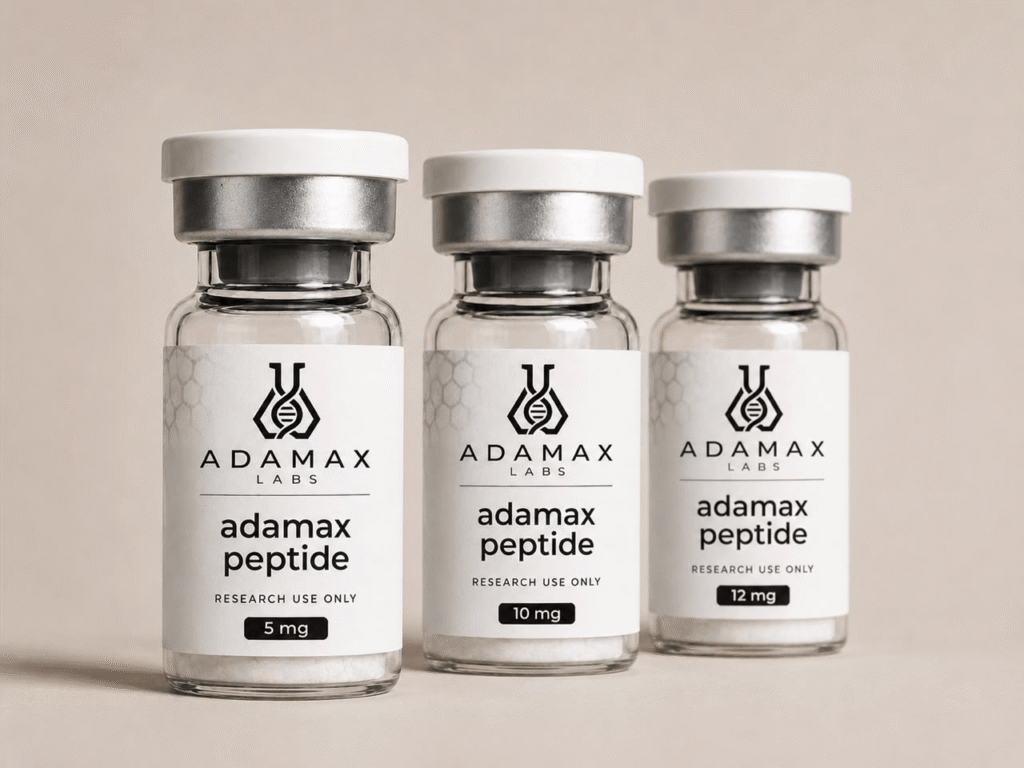
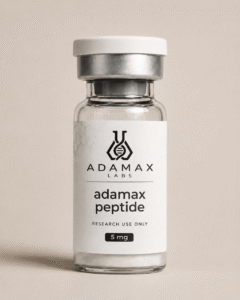
Adamax is usually described as available in a limited number of forms, most commonly as a white lyophilized powder supplied in small vials, often labeled as 5mg, 10mg, and 12mg units. These forms are intended for laboratory work and controlled experimental applications, not for consumer use. In some markets, Adamax is also available as pre-mixed solutions or sprays, however their form can vary significantly depending on the supplier.
From an educational perspective, conversations regarding Adamax dose predominantly occur in an observational or anecdotal framework, rather than as established methods. This is owing to the fact that Adamax is not an approved drug and does not have officially specified dose guidelines [9]. Any numerical data found online should be regarded as informal information rather than medical advice.
Discussions concerning Adamax doses frequently emphasize relative potency over absolute quantities. Adamax is regarded as more stable and enduring in the body compared to Semax, typically demonstrating efficacy at lower dosages in experimental contexts. This observed enhanced efficacy is ascribed to augmented resistance to enzymatic degradation and improved contact with cerebral tissue.
It must be explicitly stated that the indication of dosage ranges does not denote safety, efficacy, or appropriateness for human application. Adamax is classified as a research drug, with vendors explicitly indicating that it is not intended for patient or clinical use. Storage recommendations, such as refrigeration or freezing, are intended to maintain chemical stability and are not instructions for use.
Public discussions and online mentions
Adamax’s interest primarily originates from online discourse rather than official scientific publications. References to Adamax are found in forums, blogs, and discussion platforms, where people exchange personal experiences or theoretical analyses of its functionality.
Such talks frequently highlight significant enhancements in focus, motivation, mood, or mental resilience. Certain users draw comparisons between Adamax and Semax, citing more potent or enduring subjective effects. Some observe diversity in responses, including instances of overstimulation or anxiety.
Such relationships necessitate careful consideration. Online reviews are inherently subjective, influenced by expectations, personal biology, and several uncontrollable variables. They do not substitute clinical evidence and should not be construed as validation of efficacy or safety.
From an educational standpoint, public conversations primarily facilitate comprehension of the reasons behind Adamax’s appeal. They illustrate the necessity for instruments in cognitive function research while simultaneously emphasizing the requirement for rigorous scientific validation.
Adamax's place in the world of peptides
In the broader context of peptides, Adamax occupies a niche as an experimental, next-generation modification of known neuropeptides. It is found alongside compounds such as Semax, Selank, and P21, which are being investigated for their effects on brain adaptivity and neurotrophic signaling.
Adamax is best understood as an element in the evolution of peptide design, where chemical modifications aim to improve stability, bioavailability, and duration of action. Its relationship with Semax is particularly important, which is why a separate comparison is discussed in the article Semax vs Adamax.
Its nasal form and formulation aspects are also important, so much so that they require separate discussion in the Adamax Spray article.
Safety, Side Effects, and Limitations
The information concerning Adamax’s safety remains limited, and this limitation is a critical point to highlight. Adamax has not been subjected to comprehensive human safety investigations; hence, its long-term effects, interactions, and risk profile remains not fully understood.
Anecdotal reports often describe Adamax as well-tolerated in experimental contexts; however, such observations do not substitute for controlled safety data. Reported side effects include, but are not limited to, anxiety, sleep disturbances, headaches, and changes in arousal levels. These effects appear to vary significantly between individuals and are not consistently documented.
A frequently asserted claim is that Adamax does not induce addiction or dependence according to anecdotal evidence. Nevertheless, in the absence of official investigations, such assertions ought to be approached with caution. The lack of reported problems does not constitute proof of safety.
Regulatory classifications further emphasize the uncertainty. In some regions, Adamax has been classified as a prescription drug, while in others, it appears in reports as a designer compound. These designations reflect a lack of approval rather than confirmed harmfulness, but they underscore the peptide’s experimental nature.
A further constraint is dependence on extrapolation. A multitude of the alleged advantages of Adamax arise from its composition or from research on related compounds. This methodology is standard in preliminary research; nevertheless, it does not ensure that Adamax would exhibit the same performance in real-world conditions.
Consequently, Adamax ought to be regarded as an experimental research peptide with limited safety data. Transparency regarding these limitations is crucial for responsible discussion.
FAQ about Adamax
What is the Adamax peptide made of?
The Adamax peptide consists of a specific amino acid sequence known as Ac-MEHFPGPAG-NH₂. This structure is based on Semax but includes chemical modifications such as N-terminal acetylation and an adamantane-related component, intended to improve stability under experimental conditions.
Is Adamax the same as Semax?
No, Adamax is not the same as Semax. Adamax is a modified analogue of Semax, meaning it’s structurally related but chemically altered. These modifications are intended to enhance stability and duration of action, which is why Adamax is discussed separately in research contexts.
Is Adamax a medication or a supplement?
Adamax does not fit clearly into any of these categories. It is not an approved drug in most countries and is generally not considered a dietary supplement. In most cases, it is classified as a research substance.
Is Adamax available in nasal spray form?
Adamax was offered by some providers in the form of a nasal spray or a nasal solution. These forms refer to the method of administration, not to approval or standardization, and may vary significantly depending on the source.
Does Adamax have proven long-term effects?
There are no confirmed long-term effects of Adamax supported by large clinical trials in humans. Long-term results remain unknown due to the experimental nature of the peptide.
Why is Adamax referred to as experimental?
Adamax is referred to as experimental due to the lack of extensive human trials, regulatory approval, and standardized clinical data. Most of the information comes from laboratory studies, analyses of related peptides, or anecdotal sources.
Is Adamax legal?
Adamax’s legal status varies by country. In some regions, it may be restricted or only available by prescription, while in others, it is sold for research purposes. Legal classification does not imply confirmed safety or efficacy.
Is Adamax intended for improving athletic performance?
Some online discussions mention endurance or recovery in an experimental context, but Adamax is not approved or validated as a sports performance-enhancing substance.
Can Adamax be considered a proven nootropic?
No. Adamax should not be considered a proven nootropic agent. Its discussion is based on research interest, structural analysis, and anecdotal reports, rather than confirmed clinical evidence.
Adamax is available in the following forms:
Adamax most often appears as a white lyophilized powder supplied in small vials for research purposes. In some markets, it is also offered in solution or spray form; however, these forms are not standardized among suppliers.
Does Adamax have side effects?
A full safety profile for Adamax does not exist due to a lack of large-scale human studies. Anecdotal reports mention effects such as anxiety, sleep disturbances, or headaches, but these are neither consistent nor clinically confirmed.
Is Adamax safe to use?
Adamax’s safety has not been confirmed in formal clinical trials. As an experimental research compound, its long-term effects, interactions, and risks are not fully known. This uncertainty is one of the main limitations associated with Adamax.
Can Adamax improve memory or concentration?
Some experimental discussions and anecdotal reports suggest a connection between Adamax and memory and attention processes. However, these claims are not supported by robust clinical evidence and should not be treated as confirmed effects.
Does Adamax cause addiction?
There is no reliable clinical evidence confirming that Adamax causes addiction or dependence. At the same time, a lack of evidence does not imply safety, as controlled studies in this area are limited.
How does Adamax fit into the world of peptides?
Adamax is considered part of a new generation of modified neuropeptides designed to improve stability and brain interaction. It is found alongside peptides like Semax, Selank, and P21 in the area of experimental neurobiology research, not in clinical practice.
Is Adamax intended for use in humans?
Most suppliers clearly state that Adamax is for laboratory research only. It is not designed or approved for human use or clinical applications.
Will future research explain Adamax’s mechanism of action?
Further preclinical and clinical studies are needed to clarify the mechanisms of action, safety, and potential applications of Adamax. Until these are conducted, Adamax remains an experimental compound of scientific interest, rather than a confirmed method of action.